
Why a Character Is More Than an Image Gallery
Visual consistency makes a character recognizable. Narrative identity connects their history, knowledge, relationships, and choices across every scene and asset.
2026-09-28
The image can stay the same while the character changes
A gallery can answer a useful production question: What does this character look like? A character has to answer more: What have they lived through? What do they know? Whom do they trust? What do they want—and why do they act this way now?
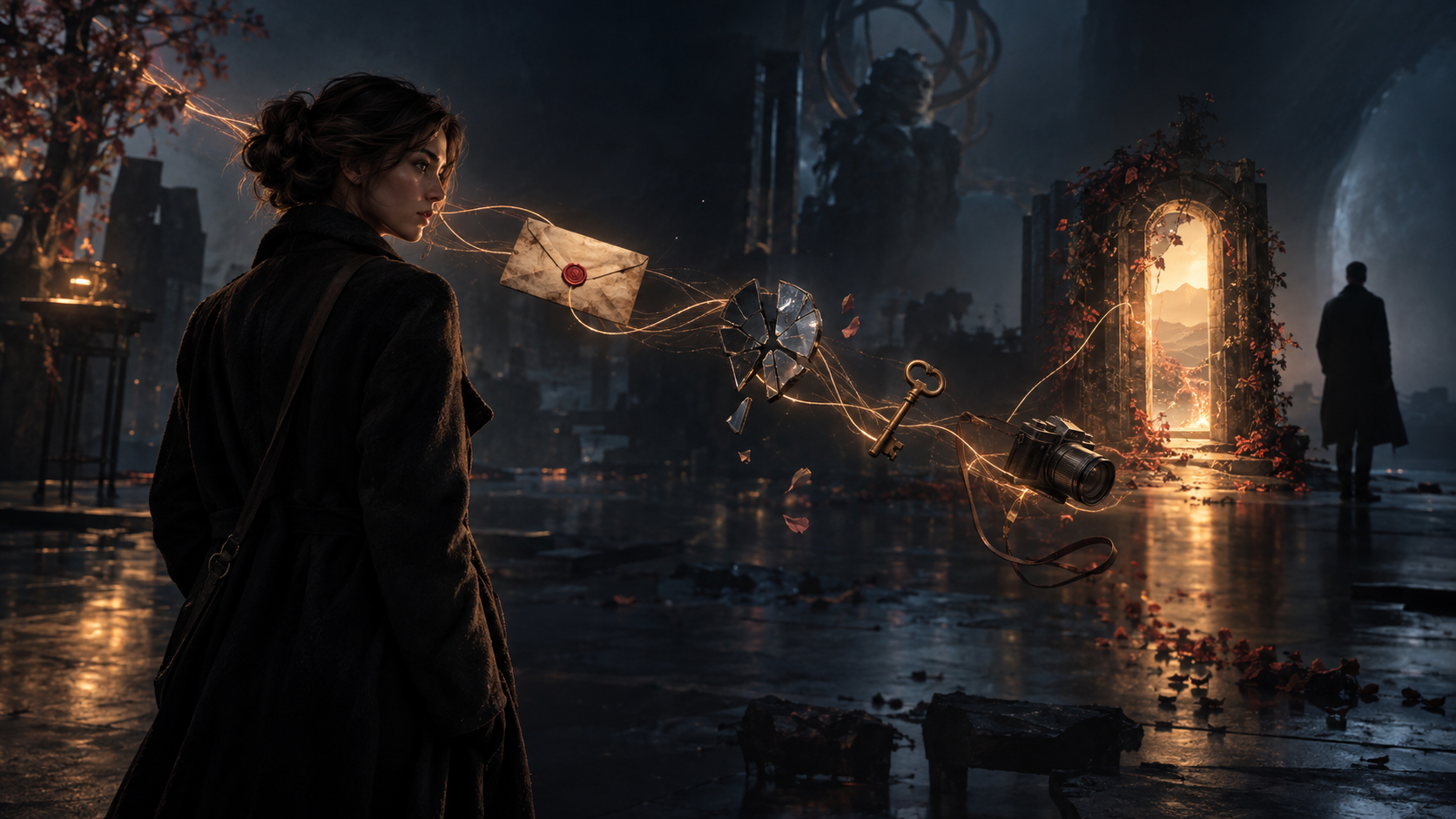
Imagine two images of the same woman. Her face is identical. She wears the same clothes. The lighting and visual direction are consistent. Between the two images, however, she learns that her closest ally betrayed her.
If she meets him in the next scene with the same unguarded trust, the problem is not visual. The gallery did its job. The character has broken.
The revelation should change something: what she knows, how she reads his words, what she hides, what risks she will take, and what actions remain possible. It may not make her openly hostile. She may choose to pretend she knows nothing. But that choice needs to belong to her new state—not to the absence of one.
Appearance is a representation, not the whole person
A figure remains the same character when they age, change their wardrobe, lose an object, or carry an injury. Those visible details matter because they can express a moment in the story. They are representations of a character in a particular state.
A robust character model keeps the visual layer connected to the things that make the representation meaningful:
- experiences that changed the character;
- knowledge, beliefs, and misunderstandings;
- relationships, loyalties, debts, and conflicts;
- goals, fears, and immediate pressures;
- capabilities and constraints that shape what they can do next.
That context lets a team create a new image, scene, or performance without asking the character to start over each time.
Dialogue follows a state
A fitting voice and convincing lip-sync can make a line feel polished. They cannot explain why a character speaks, avoids a subject, lies, or fails to understand what is happening.
Dialogue follows a state. The same sentence can carry trust, suspicion, grief, or a calculated test depending on what the speaker knows and whom they are addressing. A character who has discovered a betrayal may ask an ordinary question precisely because it is no longer ordinary to her.
Assets are derived from story state
Images, voices, wardrobe, props, and animation are not separate facts about a character. They are outputs of a particular moment. The same coat might communicate rank in one scene, conceal an injury in another, or become evidence of a choice the character wishes to hide.
This is where specifications connect meaning to function. A wardrobe description can include movement constraints. An equipment record can include what it enables or lacks. A location can include who has access, what can be overheard, and what a character risks by entering.
A connected system makes consequences visible
An image gallery remains essential for visual development and asset reuse. It should not be asked to carry narrative memory alone.
When character history, relationships, scenes, and assets are connected, a change can become inspectable. A betrayal can point to the ally, the revelation scene, the changed relationship, later dialogue, and the visual or performance assets that represent the aftermath.
That is the distinction between preserving a look and preserving a character. The first gives a project visual continuity. The second gives it consequence.
A production question worth asking
When a character’s story changes, does your system know which of their representations and scenes may need to change too?
If the answer is no, the next image may still look right. The next character moment may not be.