
People remain linked to relationships, events, facts, images, and scenes.
See the knowledge graph →Compare Saganode
See what Saganode preserves beyond the next output.
These guides show how Saganode keeps narrative structure, meaning, and provenance connected across specialized writing, visualization, and production workflows.
The structural problem
Narrative Collapse
Generative tools optimize the next output. Saganode preserves the narrative system that keeps successive outputs coherent.
This pattern is inductive storytelling: generative tools develop stories largely from the input immediately available—scene by scene, prompt by prompt, asset by asset. Without an explicit lore and universe model, local improvements can gradually break the structure, meaning, and provenance of the larger story.
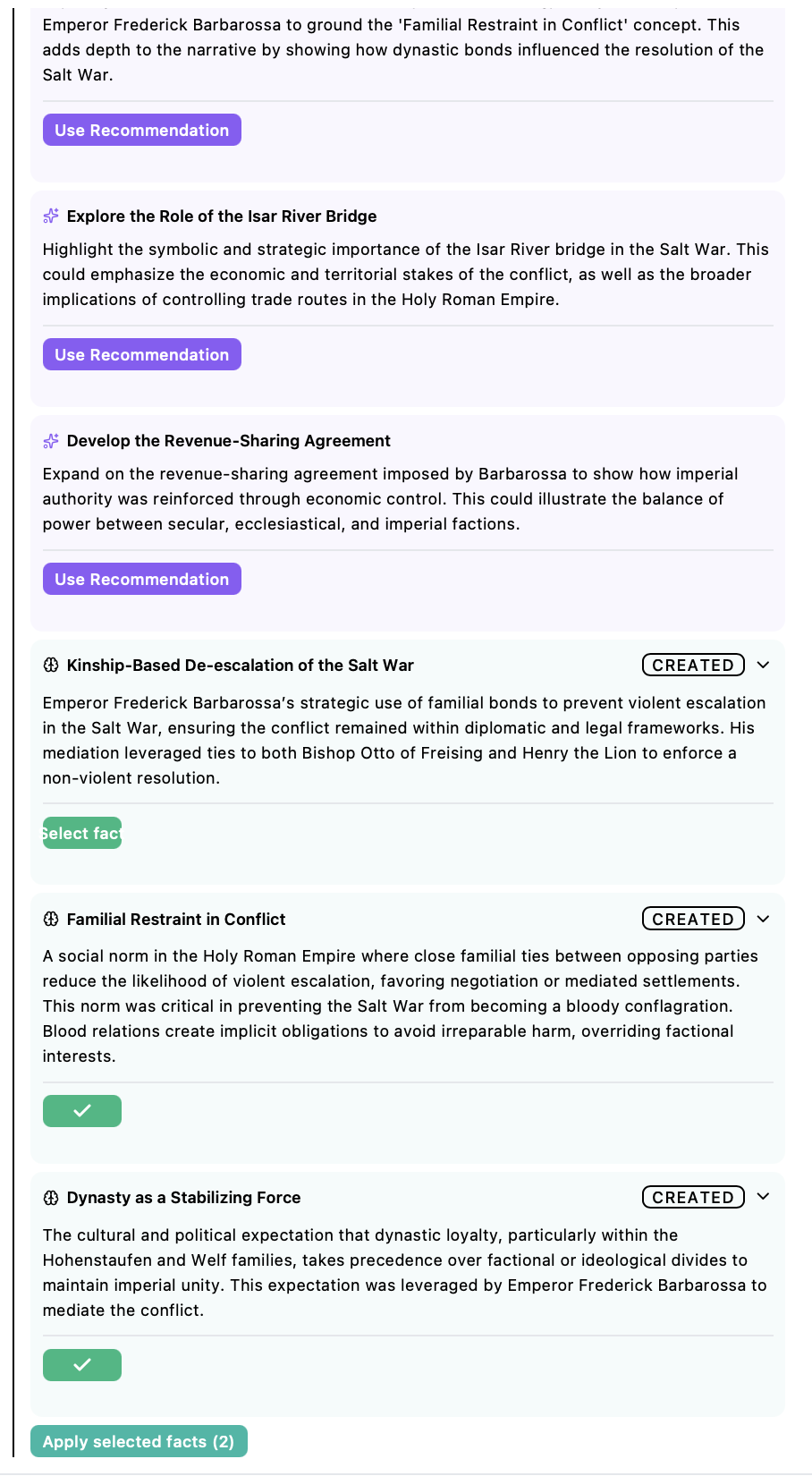
AI proposals remain reviewable instead of silently becoming canon.
See the Narrator →Knowledge, chronology, explicit events, and uncertainty stay inspectable.
See narrative timelines →Creators narrow the working context without disconnecting it from the universe.
See Subspaces →Relationships and timelines expose what a local story decision may affect.
See affected story elements →Scenes and shots retain their narrative function and relevant assets.
See Sequence Plans →The story brief survives when the image or video model changes.
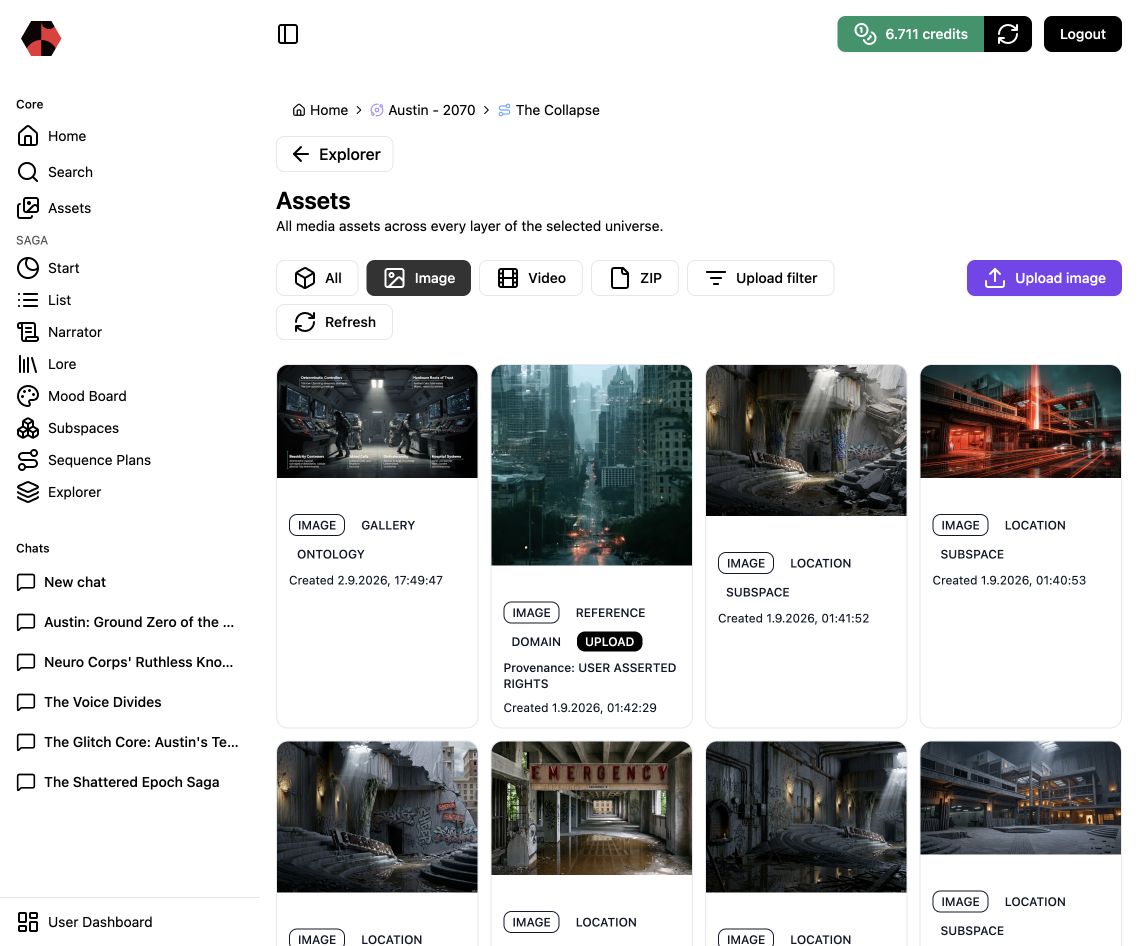
See the model-agnostic pipeline →Generated assets retain their type, origin context, role, and connection to the story.
See asset management →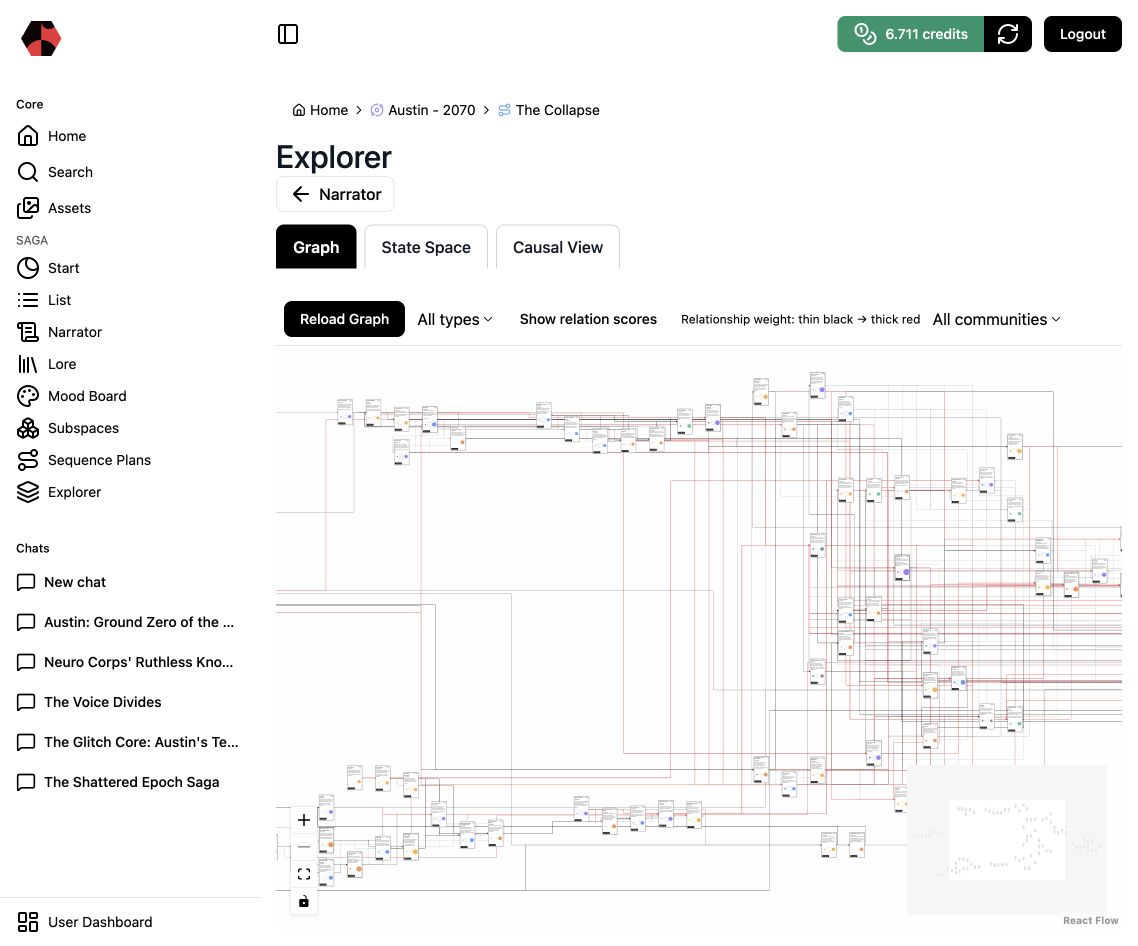
Comparison library
Different tools begin at different points.
Start with the outcome you need. Each guide states the other product’s strengths fairly, then shows the practical difference in workflow.
Saganode vs. Lore Machine
Connected narrative development versus playable, remixable audiovisual stories.
Saganode preserves the story system behind interactive and audiovisual outputs.Saganode vs. Sudowrite
A prose- and manuscript-centered assistant compared with a connected story-universe system.
Best for writers deciding between drafting help and wider world, timeline, and relationship context.Saganode vs. LTX Studio
Script-to-video production compared with universe-to-storyboard planning.
Best for filmmakers separating narrative intent from generation, editing, and rendering.Saganode vs. Runway
Narrative context and shot intent compared with high-control visual execution.
Best for teams designing a complementary planning-to-generation workflow.Saganode vs. Luma
A narrative system of record compared with agentic, multi-model production.
Best for teams asking what kind of context should persist across a creative workflow.Saganode vs. Midjourney
Connected world knowledge compared with visual style and image exploration.
Best for creators turning visual discovery into reusable narrative material.How we compare
A useful choice, not a winner.
- 01Start with the job
We identify what each product is built to help you finish.
- 02Respect specialist strengths
Generation, editing, drafting, publishing, and story development are different capabilities.
- 03Show the handoff
When tools complement one another, the guide explains where narrative context becomes production input.
See the connected story system for yourself.
Explore how Saganode carries narrative context from worldbuilding into sequences and storyboards.