
Lore-Building Philosophy
Build worlds with consequence while leaving room for discovery and retelling.
2026-07-17
Build worlds with consequence and room for discovery
Saganode is inspired by two complementary traditions of lore-building. Tolkien points toward depth: history, language, culture, rules, and consequences that make every detail imply a larger world. Homer points toward living tradition: stories gain power through retelling, variation, and shared narrative memory.
Together, they suggest a productive creative tension. A story world needs enough coherence to remain recognizable and meaningful, and enough openness to be explored from new perspectives.
Navigate complexity; do not freeze it
Saganode applies this idea as a creative practice. Explore possibilities, test them against connected context, and let creators decide what becomes trusted canon. Connected lore, timelines, Subspaces, and the Narrator make the world easier to navigate as it changes.
Reason from what the world already knows
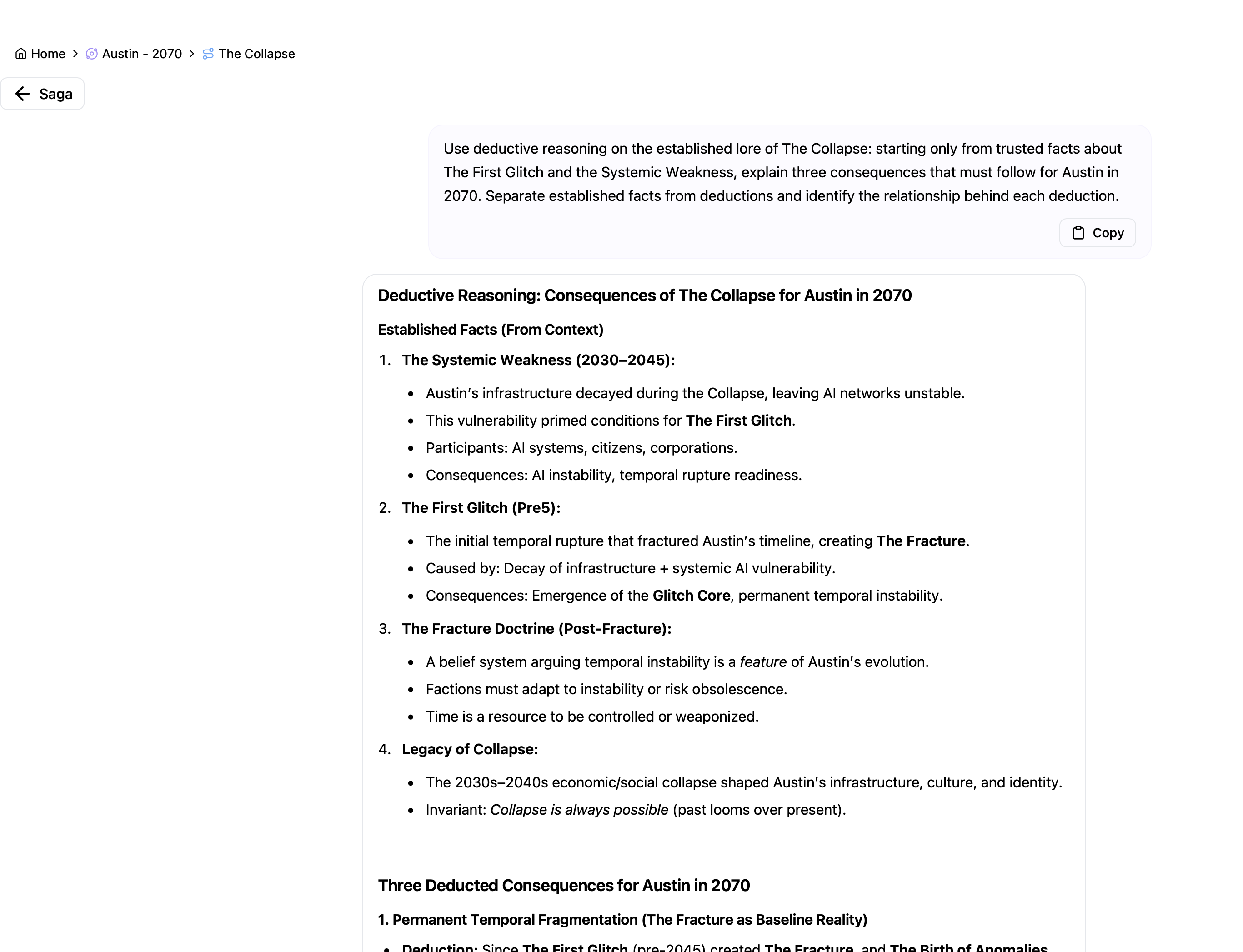
Start with established facts, then ask the Narrator to trace their consequences. In The Collapse, a deductive prompt separates trusted context from new conclusions: systemic weakness and the First Glitch are treated as evidence, while their consequences for Austin in 2070 remain explicit deductions. When a conclusion belongs in the world, review the extracted claims and apply only the facts you want to preserve.
Turn consequences into connected lore
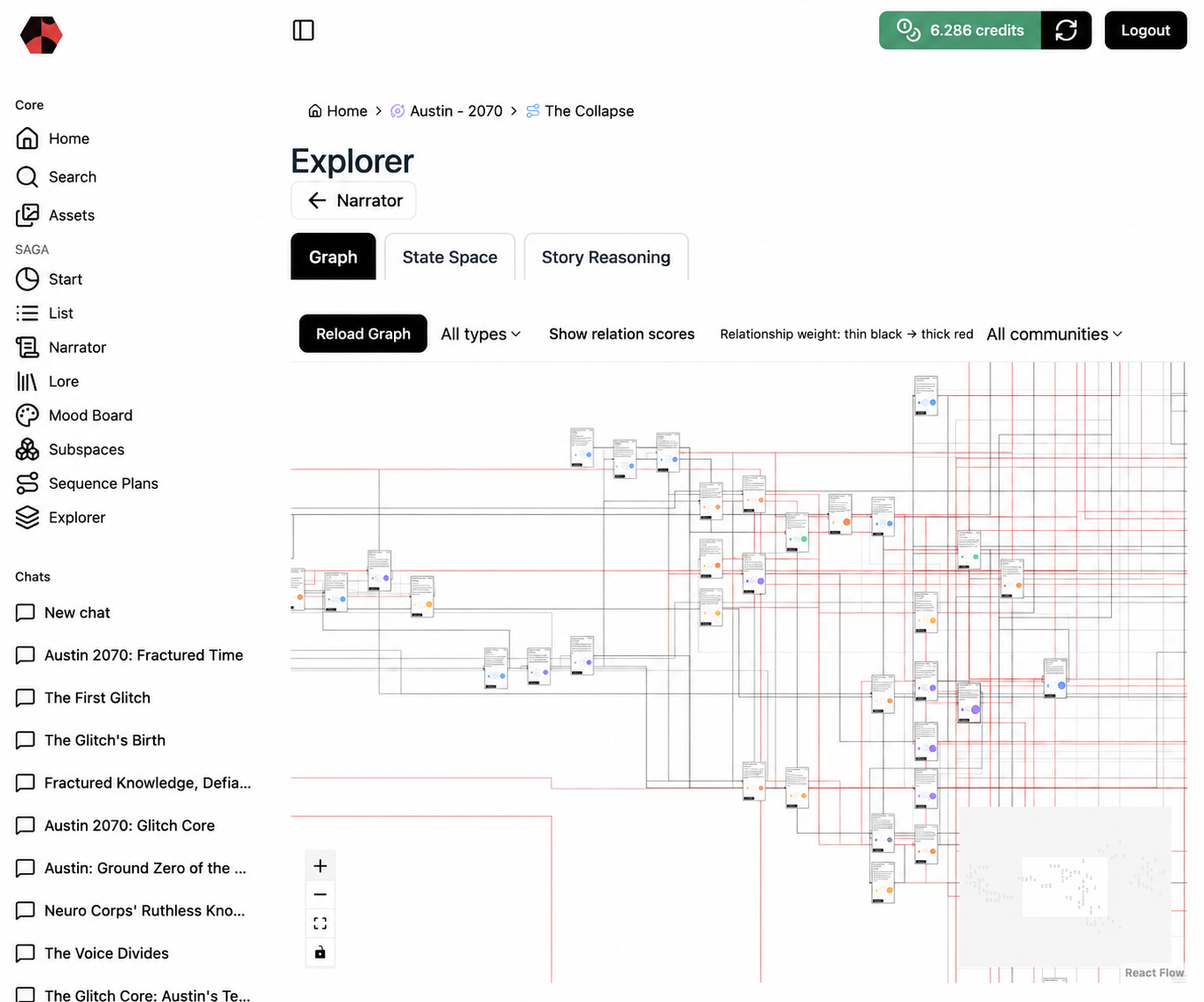
Accepted consequences gain structure in the Explorer. Events record what happens; concepts preserve the rules, beliefs, and tensions that make those events meaningful. Seeing both in the graph keeps new lore connected to its causes instead of leaving it as an isolated idea.
Check whether the world remains stable
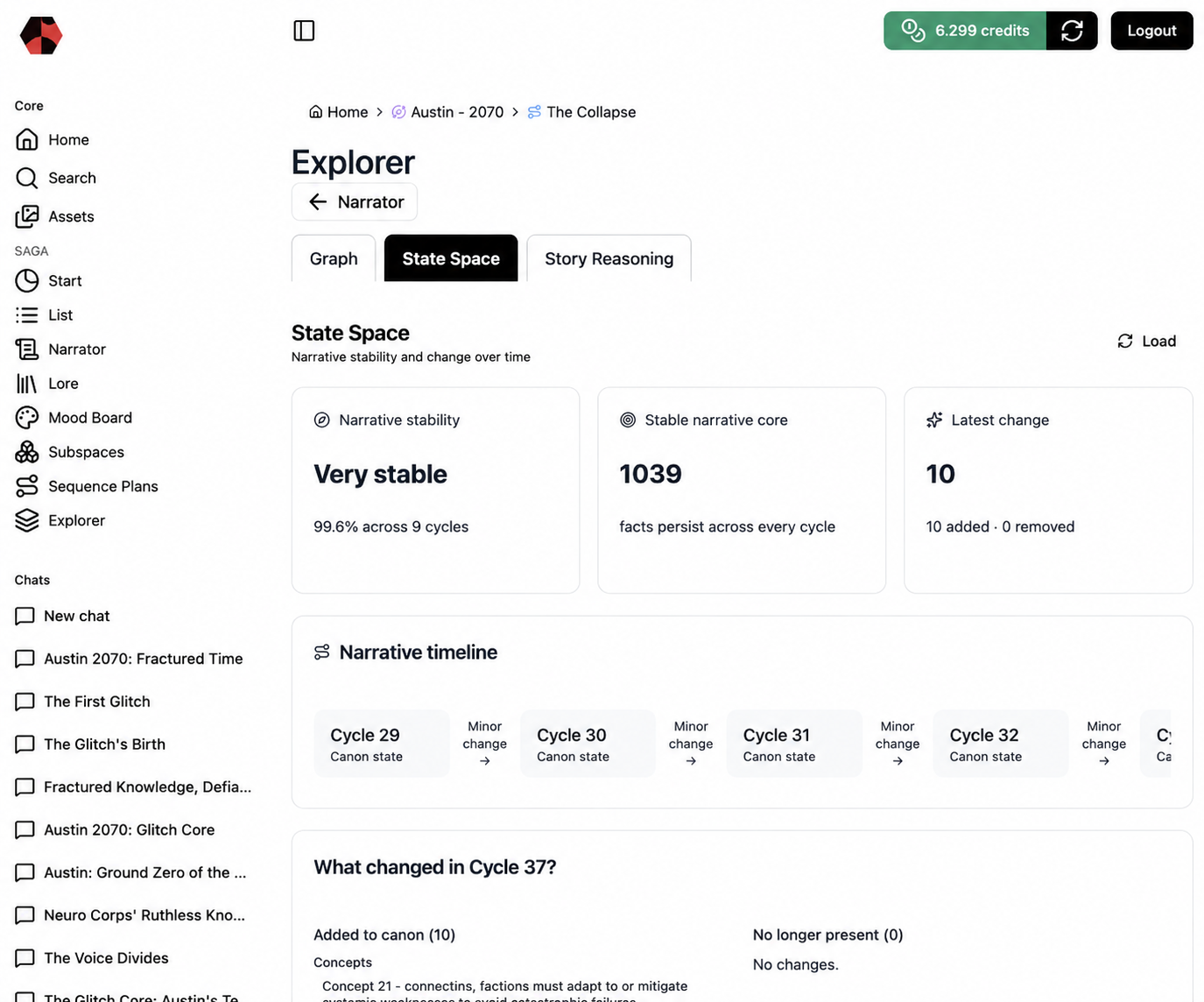
The State Space shows what changed after facts were applied and what persists across canon cycles. Narrative stability, the stable narrative core, and the latest change make growth legible: creators can add consequences without losing sight of the foundations that still hold the world together.
The philosophical influences of Popper and Godel support a similar stance: living creative systems remain open to conjecture, critique, and revision. They are inspirations for how to work with complexity, not proof that a tool can control it.
Continue with Narrative Drift and Governance, Story Reasoning, or Explore Saganode.