
Sequence Plans for Social Media: 9:16 Is Now a Native Choice
Saganode now supports 9:16 in Sequence Plans for generated video, so social-first stories can be planned in their intended vertical frame.
2026-09-28
Social-first video needs more than a vertical crop
Saganode now supports a 9:16 aspect ratio in Sequence Plans for generated video. Creators can plan social-first sequences directly in the vertical frame they are making for—without disconnecting the work from the story, characters, locations, and visual direction behind it.
This is a practical change with a creative consequence: a vertical sequence can be designed as a vertical sequence from the start.
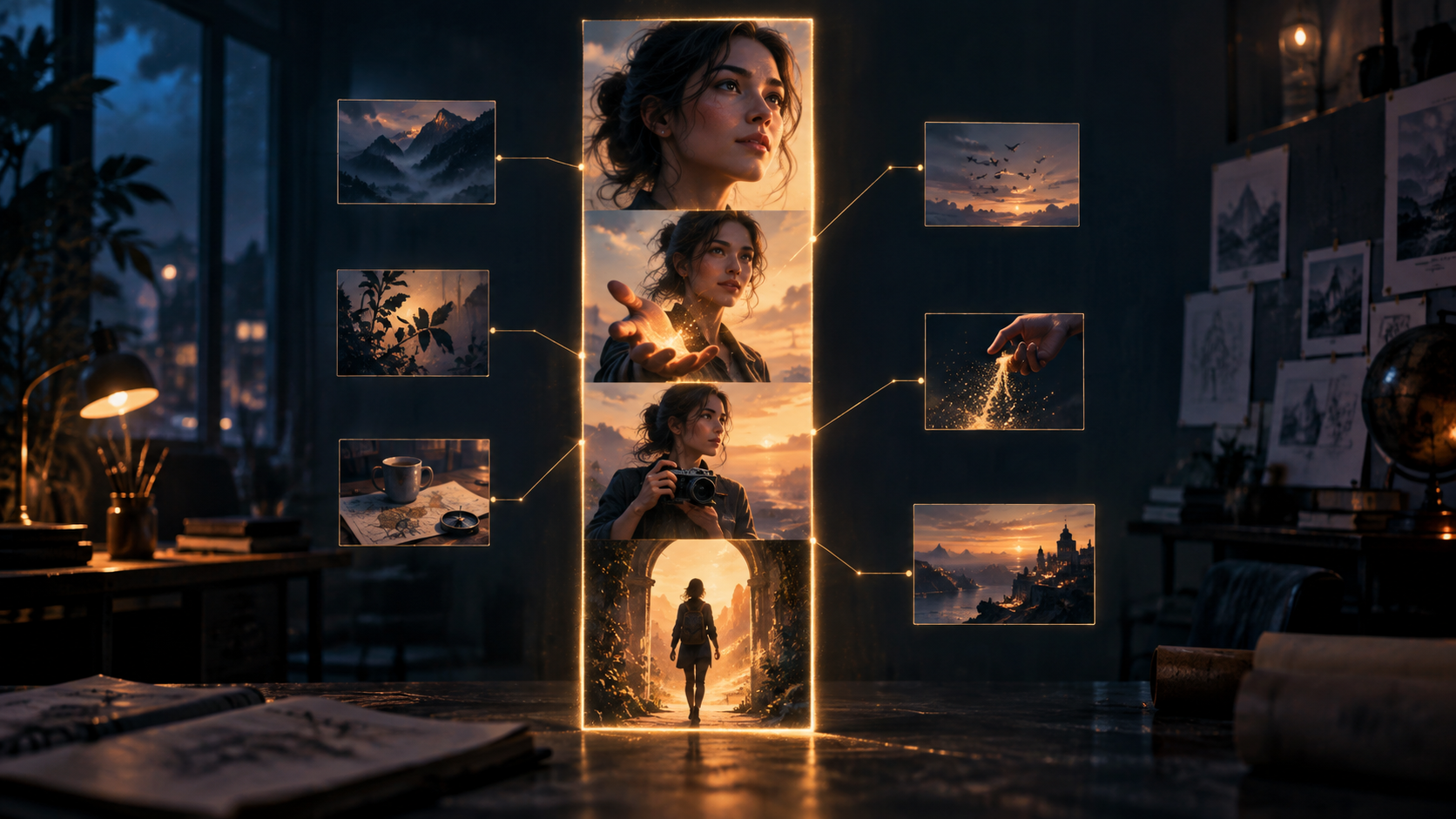
The frame changes the plan
9:16 is not simply a wide image with its sides removed. It concentrates attention. A face, gesture, object, or line of movement can become the entire scene. At the same time, a vertical frame has less room for geography, ensembles, parallel action, captions, and interface overlays.
That changes questions a creator should answer before generating video:
- Who needs to remain visible in this moment?
- What action must be legible on a phone screen?
- Where can captions or platform controls sit without covering meaning?
- Does the scene need a close composition, a reveal, or a movement that uses the vertical space?
- What should the viewer understand or feel before they scroll on?
Those are sequence-planning questions, not just export settings. Selecting 9:16 in Saganode’s Sequence Plan makes the intended delivery frame present while scenes and shots are being developed.
Keep the social sequence connected to its story
Social video may be brief, but it does not have to be context-free. A character in a vertical shot still has a history. A prop still has a role. A location still affects what can happen. A sequence still needs a reason for its opening beat, its progression, and its ending.
Saganode keeps this context connected as a creator moves from an Act into scenes and shots. A social-first Sequence Plan can therefore draw on the same narrative foundation as a longer film, campaign, or recurring world: characters, events, locations, visual references, and the purpose of the moment.
The result is not “long-form content squeezed into a phone frame.” It is a plan designed for the immediate, focused experience of vertical social video while remaining part of the wider creative system.
When to choose native 9:16
Choose 9:16 in the Sequence Plan when the vertical frame is central to the idea. That may include a character address, a product or campaign moment built around one focal action, a social short with a phone-first rhythm, or a series whose visual language is designed for Reels, Shorts, or TikTok.
The format should be a visible creative choice, not an automatic substitute for direction. A good vertical plan still clarifies the audience takeaway, the dramatic beat, the visual focus, and the connected context that keeps the sequence coherent.
For a project that needs several deliverables, vertical can also be one intentional expression of a shared story foundation. The team can make a native 9:16 sequence where vertical framing serves the concept, while preserving the context that helps related work stay consistent.
A practical social-media workflow
- Start with the story or campaign moment: what needs to change, land, or be understood?
- Create the Sequence Plan and select 9:16 when the sequence is social-first.
- Plan scenes and shots for vertical attention: essential subject, action, movement, and safe visual space.
- Connect the relevant characters, locations, devices, and visual references.
- Review the sequence as a complete vertical experience before generating production media.
This keeps social production fast without asking creators to reconstruct the context of every short from scratch.
From social brief to production context
The useful difference is not merely that a vertical option exists. It is that the option lives in the same planning surface as the sequence’s narrative and visual decisions.
A social-media brief can now become a 9:16 Sequence Plan directly. Creators can use the vertical format when it is right for the work, keep the creative purpose visible, and carry connected context into generated video.
Plan for the screen your audience will actually hold—without losing the story behind the shot.
Continue exploring
- From Story to Storyboard
- Creating Sequence Plans
- 9:16 Can Be a Sequence Plan Decision
- One Story, Ten Assets—Without Rebuilding the Story
- AI Video Production Workflow
FAQ
Does Saganode support 9:16 video planning?
Yes. Sequence Plans support a 9:16 aspect ratio for generated video, so creators can plan a vertical social-first sequence in its intended frame.
Is 9:16 only for post-production?
No. A team can still adapt a master later, but when vertical is the intended viewing experience, 9:16 can be selected directly in the Sequence Plan so it informs the creative planning.
Does a vertical Sequence Plan lose story context?
No. The plan remains connected to the characters, locations, visual references, and narrative purpose that shape the sequence.